Red lentil soup (mercimek çorbası in Turkish) is made by cooking onion in butter, adding red lentils and hot water, simmering until the lentils fall apart, then blending the soup and serving it with lemon.
Allergens: milk
Red Lentil Soup
A soup's flavor begins before any water reaches the pot.
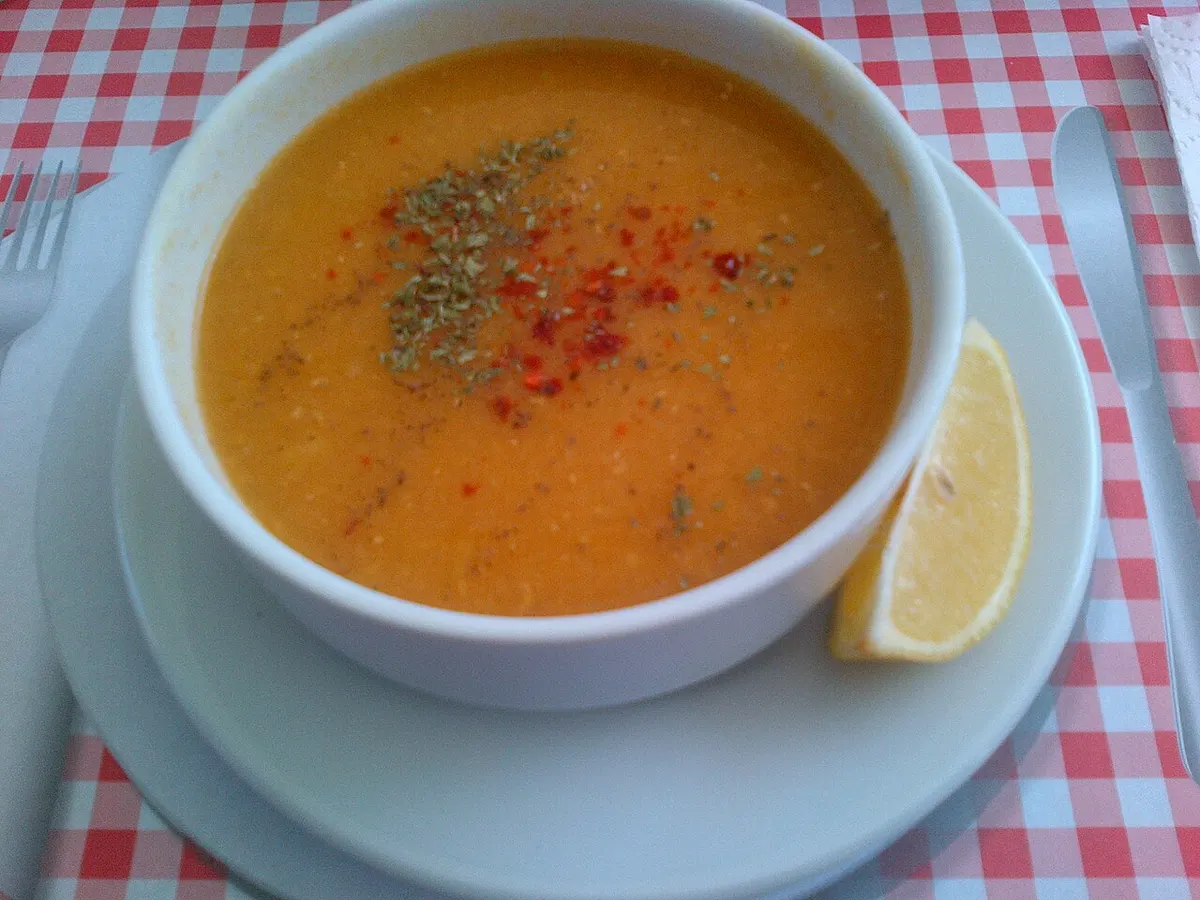
One pot, three lessons
Aromatic base
An aromatic base is onion cooked in fat before any liquid goes in. Cooking in fat softens the onion's sharpness and brings out its sweetness. The onion's flavor then spreads through the whole soup. That is why you cook the onion before the water.
Puree
Red lentils fall apart as they cook and thicken the water. That is why this soup needs no flour.
Salt at the end
The water reduces as the soup cooks, which concentrates the salt. This is why you finish the salt at the end, by taste.
What and how much
Grams are the real measure, and household measures are approximate. Change the number of servings and the amounts adjust on their own. Mercimek çorbası is the everyday lentil soup of Turkey. Red lentils are split lentils sold in most supermarkets. Aleppo-style chili flakes (pul biber) are mild, fruity red pepper flakes from a Middle Eastern grocery or online. If you cannot find them, mix sweet paprika with a little crushed red pepper. Dried mint is sold at the same shops, and the leaves from a plain mint tea bag work too.
By weight, use 1 part lentils to 6 parts water. If the soup is thick at the end, thin it with hot water.
Why is the salt 0.8–0.9%?
The salt is 0.8–0.9% because it is calculated from the weight of the cooked soup. The soup weighs about 1.4 kg when cooked, and 0.8–0.9% of that weight is about 12 g of salt. Add all of the salt at the end, tasting as you go.
Chef's Essentials General salting: 0.8–1.2% of the dish's weight →Seven steps, with the first liquid in step four
Wash the lentils
Rinse the lentils in a strainer under cold running water until the water runs clear.
Why? Dust and starch on the surface create foam. That is why washed lentils foam less.
Chop the onion fine
Cut the onion into 0.5 cm cubes.
Why? Small pieces soften faster and disappear into the soup. That is why you chop the onion fine.
Cook the onion in butter
Melt three-fifths of the butter over medium heat. Cook the onion for 8–10 minutes, until it is translucent but has not taken on color.
Why? Cooking softens the onion's sharpness and makes it sweet. Burned onion turns bitter. That is why you keep the heat at medium.
Add the lentils and hot water
Add the lentils and the hot water, and stir.
Why? Hot water does not cool the pot, so the soup boils sooner and the onion stops cooking. That is why the water goes in hot.
Boil, skim, lower the heat
When the soup boils, skim the foam off the surface with a spoon. Lower the heat and partly cover the pot. Cook for 20–25 minutes, until the lentils fall apart. Scrape the bottom with your spoon from time to time.
Why? Lentils sink and stick to the pot. So you need to stir from the bottom now and then.
Blend, salt, taste
When the lentils have fallen apart, make the soup smooth with an immersion blender or a whisk. Add the salt and taste. If the soup is thick, add hot water.
Why? Liquid reduces during cooking, so you measure the salt at the end. Starchy soup thickens as it cools. That is why you leave the soup slightly thin on the stove.
Make the serving butter and serve with lemon
Melt the remaining butter in a small pan, turn off the heat, and add the chili flakes. Drizzle it over the soup. Rub the mint between your palms and sprinkle it on top. Serve with lemon.
Why? The chili's color and aroma pass into the fat, but chili flakes burn at high heat. That is why the flakes go in after the heat is off. The acid in the lemon balances the rich, heavy taste of the soup.
What cooking does to an onion
Cut an onion in half and chop both halves fine. Leave one half raw. Cook the other half in a little fat for 10 minutes without letting it take on color. Smell and taste both.
Plate B is sweet and much less sharp. Heat breaks down the onion's sharp-smelling compounds and opens its cells. That is why the onion's sweetness comes forward. Most pot dishes start with onion for the same reason. The same aromatic base appears in kuru fasulye (Turkish white bean stew) and zeytinyağlılar (vegetables braised in olive oil).
After one spoonful...
| If the dish is | Do this now | Next time |
|---|---|---|
| Bland | Add a pinch of salt first, then a few drops of lemon | Finish the salt at the end, by taste |
| Too thick | Add hot water one ladle at a time, boil, and taste | Leave it slightly thin on the stove |
| Too thin | Take off the lid and reduce it over low heat | Keep the water at 1 : 6 by weight |
| Scorched on the bottom | Do not stir, and move the top of the soup to a clean pot | Stir from the bottom now and then, and lower the heat |
| Bitter from the onion | You cannot fix this, because burned onion stays bitter | Cook the onion over medium heat without letting it take on color |
| Bitter chili butter | Throw out the butter and make it again | Add the chili flakes with the heat off |
If you know red lentil soup
Ezogelin
+ a heartier lentil soup with rice, bulgur (cracked wheat), and tomato paste
Balkabağı çorbası
+ pumpkin soup, where the main ingredient changes and the base stays the same
Dal
+ ghee (clarified butter) replaces butter, and spices are popped in hot fat
Did you make it?
If the onion went in first, this soup is now your road to every pot you will ever cook.
Up next: Week 3
Techniques: Aromatic base · Boiling and steeping
If it goes wrong: Soup or sauce is too thick · Stuck to the bottom, smells burned · Onion or garlic burned