Rice pilaf (pilav in Turkish) is made by turning washed rice in butter, cooking it over low heat in 1.5 glasses of hot water for each glass of rice, and letting it rest covered for 10 minutes after the heat is off.
Allergens: milk
Rice Pilaf
The last thing a pilaf asks of you is to do nothing.
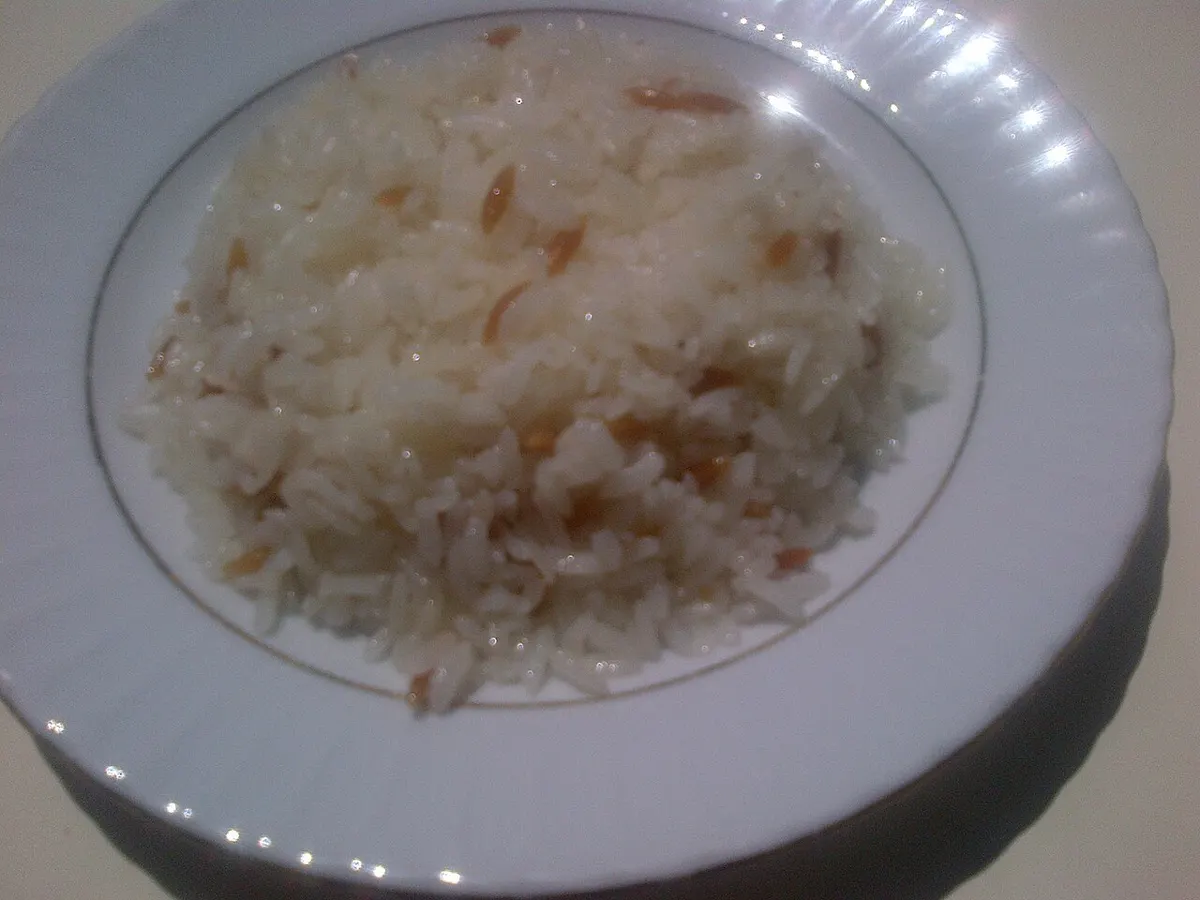
One pot, three lessons
Ratio
Rice cooks by absorbing water. With too little water the rice stays hard, and with too much it turns to mush. That is why you measure the water.
Starch
The starch on the surface of rice turns sticky in hot water. Washing removes this starch. This is why washed rice cooks into separate grains.
Demleme (steam rest)
Demleme is the Turkish word for resting a covered pot off the heat. After the heat goes off, the steam in the pot keeps cooking the rice. If you lift the lid, the steam escapes and the rice stays undercooked. That is why the lid stays on until the rest is over.
What and how much
Grams are the real measure, and household measures are approximate. Change the number of servings and the amounts adjust on their own. Baldo is a medium-grain Turkish rice that you can find at a Middle Eastern grocery or online. Calrose rice is a good substitute.
Use 1.5 glasses of water for each glass of rice. Measure both with the same 200 ml glass. Depending on the type of rice, the water can go up to 1.8 glasses. That is why you should write down the ratio you used after your first pilaf.
Chef's Essentials Pilav ratio: about 1.5 glasses of water per glass of rice →Why is the salt 0.8%?
The salt is 0.8% because, as with the general rule, it is calculated from the weight of the food. Rice, water, and butter come to about 970 g, and 0.8% of that total is about 8 g of salt. In pilaf, the salt goes in before the rice absorbs the water. This is why salt is hard to correct later.
Chef's Essentials General salting: 0.8–1.2% of the dish's weight →Seven steps, and waiting matters most
Wash the rice
Rub the rice with your hands in a large bowl of cold water. Change the water 3–4 times, until it runs clear, then drain the rice.
Why? The starch on the surface goes into the water. So the grains do not stick to each other as they cook.
Heat the water
Boil the measured water in a kettle or a separate pot.
Why? Cold water cools the pot and delays the boil. The cooking time then runs longer and the grains fall apart.
Turn the rice in the butter
Melt the butter over medium heat. Add the rice. Stir for 2–3 minutes, until the grains turn shiny and crackle lightly.
Why? The fat coats the surface of each grain. That is why the grains stay separate.
Add the water and salt
Add the hot water and the salt, and stir once.
Why? Salt spreads evenly through the water and enters the rice along with it. That is why the salt goes in together with the water.
Lower the heat at the boil and cover
When the water boils, turn the heat to the lowest setting and cover the pot. Cook for 12–15 minutes, until the rice has absorbed the water and small holes appear on the surface. Do not stir during this time.
Why? Stirring pulls starch out of the grains and makes the pilaf mushy. The lid keeps the steam in the pot. That is why pilaf cooks covered and unstirred.
Turn off the heat and let it rest
When the surface of the rice is full of small holes, turn off the heat. Lift the lid briefly, lay a paper towel under it, fold the edges up over the lid, and close it. Let the pilaf rest for 10 minutes without opening the lid.
Why? The steam finishes the cooking. The paper towel catches the water that condenses on the lid. So the water does not drip onto the rice.
Fluff with a fork and taste
Gently lift the pilaf from bottom to top with a fork. Taste a bite. Put any leftover pilaf in the refrigerator within 2 hours.
Why? A fork separates the grains without crushing them. Bacteria can grow in cooked rice at room temperature. This is why leftover pilaf should not sit out.
What washing changes
Put a spoonful of rice in each of two small bowls and cover it with water. Rub the rice in bowl B with your finger, then look at the water in both bowls.
The water in bowl B turns white. The white comes from the starch on the surface of the rice. Starch thickens in hot water and glues the grains together. That is why you wash rice for pilaf. In sütlaç (Turkish rice pudding) and risotto, the creamy texture comes from starch. So you do not wash the rice for sütlaç or risotto.
After one spoonful...
| If the dish is | Do this now | Next time |
|---|---|---|
| Mushy | Open the lid and wait 3–5 minutes so the steam can escape | Wash the rice, do not stir, and measure the water |
| Hard | Sprinkle on 2–3 Tbsp (15 ml each) of hot water, cover, and leave on the lowest heat for 5–10 minutes | Lower the heat and cover the pot tightly |
| Scorched on the bottom | Move the top of the pilaf to another dish and leave the bottom alone | Use a heavy-bottomed pot |
| Sticky | Spread the pilaf on a tray and let the steam escape | Do not stir before the rest is over |
| Bland | Add a little butter and salt and stir with a fork | Add the salt together with the water |
If you know pilaf
Bulgur pilavı
+ bulgur (cracked wheat) replaces the rice, and the water ratio changes
Şehriyeli pilav
+ şehriye (thin, short vermicelli noodles) is fried in the fat first
Risotto (the opposite case)
+ stirred to release starch, and the rice is not washed
Did you make it?
If the grains stand apart, you found the ratio. If they don't, the rice just taught you one more thing.
Up next: Red lentil soup, the aromatic base
Techniques: Boiling and steeping
If it goes wrong: Pilav turned mushy · Pilav is still hard · Stuck to the bottom, smells burned