Gavurdağı is a salad from Antep (Gaziantep, Turkey) of tomato, pepper, and onion cut into 0.5 cm cubes and combined with toasted walnuts and pomegranate molasses. Most classic versions have no cucumber.
Allergens: tree nuts
Gavurdağı Salad
The same tomato, the same onion. In Antep the knife grows smaller, and walnuts and pomegranate molasses come to the bowl.
If you have made shepherd's salad (çoban salata), you already know half of this salad. This page teaches only the four things that change, and the reason for each one.
Gavurdağı salad is said to take its name from the Gavur Mountains (today's Nur Mountains) west of Gaziantep, a city in southeastern Turkey. In Antep, as Gaziantep is often called, the salad comes to the table beside kebab.
Four changes, four reasons
The pattern is the same: chopped raw vegetables + salt + acid + oil + fresh herb, combined at the last moment. Here is what changes:
The knife cut gets smaller
When the edge of the cube is cut in half, the total surface of the same amount of vegetables doubles. Dressing clings to the surface of the vegetables. So in a finely cut salad each bite carries more dressing, and you can eat the salad with a spoon.
The source of acid changes
Pomegranate molasses is made by boiling pomegranate juice until it thickens. It holds the pomegranate's sugar along with its sourness, and it is thick. That is why the dressing is sour and slightly sweet, and it leaves a thin coat on the vegetables.
Water is reduced
Cucumber and the seedy part of the tomato release the most water. A fine cut exposes more cut surface, so water comes out faster and thins the pomegranate molasses. That is why most classic Gavurdağı recipes have no cucumber and the tomato seeds are removed.
Crunch and heat are added
Walnuts give you something firm to chew among the soft vegetables. Their oil balances the sourness of the pomegranate molasses. Chili flakes add mild heat. That is why walnuts and chili flakes are the tastes that separate Gavurdağı from shepherd's salad.
What and how much
Grams are the main measure, and household amounts are approximate. A tsp is 5 ml and a Tbsp is 15 ml. If you have no measuring spoons, 5 ml is about 1 level dessert spoon. If you change the number of people, the amounts adjust on their own. Chili flakes (pul biber) are mild, slightly oily Turkish red pepper flakes, sold as Aleppo-style or Maras pepper. Find them at a Middle Eastern grocery or online. Regular crushed red pepper is hotter, so use half the amount. Long green pepper (sivri biber) is a thin-walled Turkish pepper, and Anaheim or cubanelle peppers work in its place. Sumac is a ground dried red berry with a tart, lemony taste, sold at Middle Eastern groceries and online. If you cannot find it, use a little grated lemon zest.
3 Tbsp (45 ml) olive oil, 2 Tbsp (30 ml) pomegranate molasses. Shepherd's salad used 3:1. Pomegranate molasses is less sour than lemon, because its sugar balances the sourness. That is why you need more of it to reach the same sourness.
Chef's Essentials Salad dressing ratios (oil : acid, by spoon) →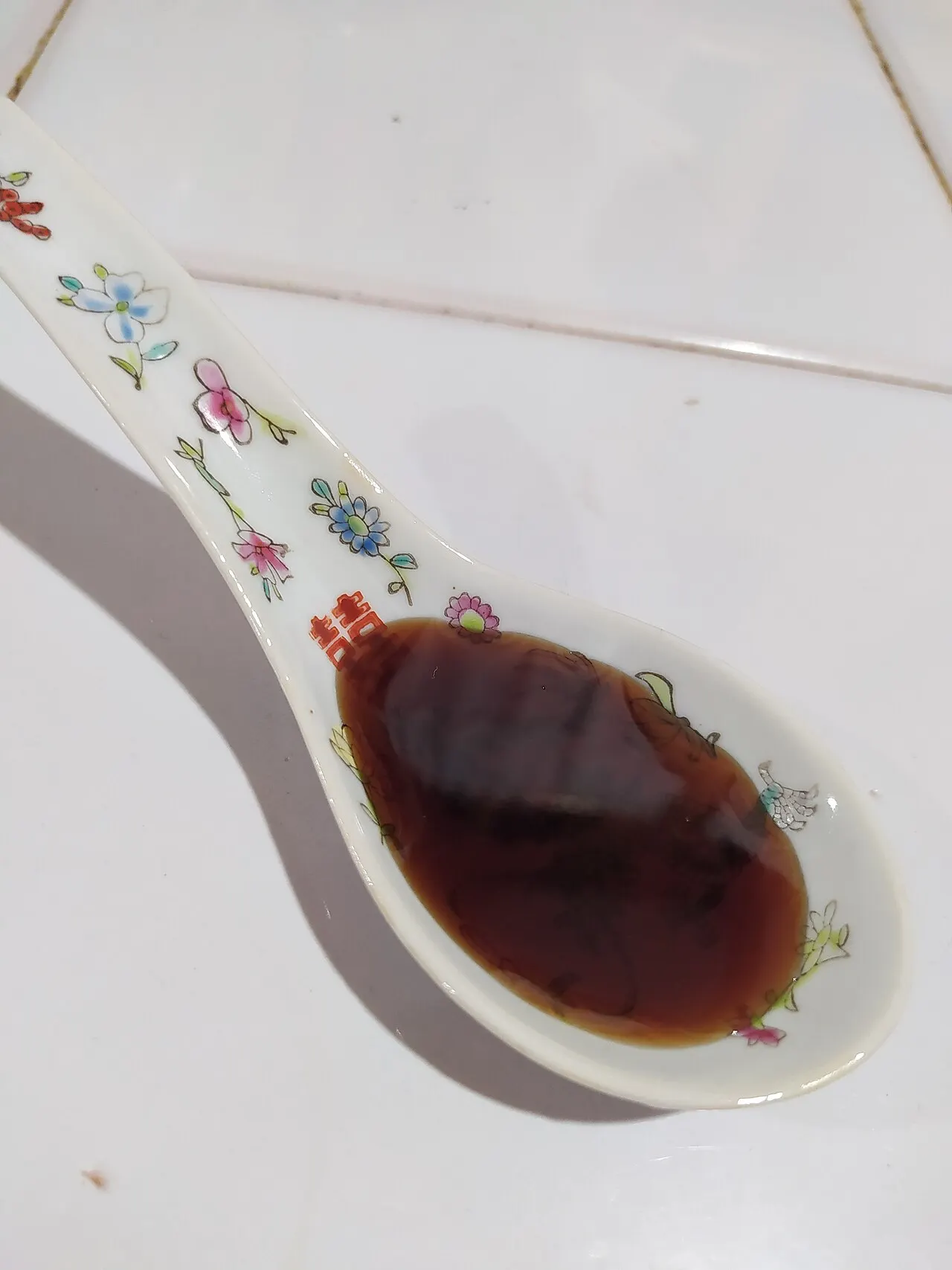
Buying pomegranate molasses
Pomegranate molasses is a dark, tart syrup used across Turkey, Iran, and the Levant. Look for it at a Middle Eastern grocery, in the international aisle of a large supermarket, or online. Choose a bottle whose ingredient list says only "pomegranate." Added glucose syrup, sugar, or citric acid make it sweeter or sharper, so the 3:2 ratio will not hold with those products.
Some pomegranate molasses also contains salt, so taste it on its own before you salt the dressing. If you cannot find any, simmer 100% pomegranate juice in a wide pan until it coats a spoon and has reduced to about a quarter of its volume. As a last resort, use balsamic glaze with a few drops of lemon juice. The dressing will still be sweet and sour, but the taste will be different.
A whole cauldron of pomegranates fits in one bottle.
The same three moves, half the spacing
The claw grip and the order of slice → stick → cube are the same as in shepherd's salad. The only change is that the cutting width drops from 1 cm to 0.5 cm.
The dark edge marks the surface the dressing clings to. The volume stays the same and the surface doubles. That is why, in a fine dice, the dressing touches more of the vegetable's surface.
Remove the tomato seeds
Cut the tomato into quarters. Hold the knife parallel to the skin and slide it under the seedy part. The skin and flesh stay in your hand. Do not throw out the seedy part. Use it in a soup or a tomato sauce.
Even cuts matter more than speed
In a 0.5 cm cube, even a 2 mm difference is visible, and the larger piece stands out in the bite. So cut slowly, and set the spacing with your knuckle instead of by eye.
The knife must be sharp
A dull knife crushes a tomato as it cuts 0.5 cm cubes, and the juice runs onto the board. Crushed tomato thins the dressing. So test the knife on a tomato before you start. If it does not go through the skin without pressing, sharpen the knife first.
Break the walnuts, do not chop them
Walnuts chopped fine with a knife turn to powder and cloud the dressing. Pieces the size of a chickpea stay distinct in the salad. That is why you break the walnuts to chickpea size, by hand or by pressing with the flat side of the knife.
Seven steps: three you know, four new
You know this is a step you did in shepherd's salad. New is what sets this salad apart.
Toast the walnuts in a dry pan New
Put the walnuts in a pan with no oil and stir constantly over medium heat. When they smell toasted and turn one shade darker, after about 4 minutes, move them to a plate right away. Once the walnuts cool, break them to the size of a chickpea.
Why? Heat browns the walnut's surface, strengthens its smell, and removes moisture. A toasted walnut is crunchier. Left in the pan, a walnut keeps toasting from the heat of the pan and turns bitter. That is why you take the walnuts out of the pan as soon as they are ready.
Chop the onion fine, rub it with salt and sumac New
Chop the onion into 0.5 cm cubes. Rub it with your fingers with a pinch of salt and half the sumac, and let it sit for 5 minutes. Do not rinse it. Just squeeze it in your palm.
Why? Salt pulls out the onion's sharp juice. The sourness of the sumac passes into the onion. If you rinse, the sumac goes too. That is why, unlike in shepherd's salad, you do not rinse the onion and only squeeze out its juice.
Chop the pepper fine You know this
Remove the stem and seeds. Chop the pepper into 0.5 cm cubes.
Why? Pepper is firm. Cut to the same size as the other pieces, it chews easily in the same bite. That is why the pepper is also cut to 0.5 cm.
Dry the parsley, chop it fine You know this
Wash the parsley and dry it well with paper towels. Remove the thick stems. Chop by passing the knife over the leaves two or three times.
Why? Wet parsley gets crushed under the knife and turns dark. Dry parsley cuts cleanly and stays green. That is why you dry the parsley before chopping.
Remove the tomato seeds, cut it last New
Cut the tomato into quarters and remove the seedy part. Cut the remaining flesh into 0.5 cm cubes. This time, do not add the juice on the board to the bowl.
Why? The seedy part is the juiciest part of the tomato. In Gavurdağı the pomegranate molasses keeps the dressing thick, and water thins it. That is why, unlike in shepherd's salad, the tomato juice stays out of the bowl.
Whisk the dressing in a separate bowl New
Mix the pomegranate molasses, salt, chili flakes, and the remaining sumac. When the salt has dissolved, add the olive oil and whisk with a fork for 20 seconds.
Why? Salt does not dissolve in oil. You learned this rule in shepherd's salad. Also, pomegranate molasses is thick, and if you pour it straight into the bowl it collects in one spot. That is why you whisk the dressing separately first and then spread it evenly over the salad.
Combine at serving time, add the walnuts last, taste You know this
Mix the vegetables and the dressing. Stir in half the walnuts and sprinkle the other half on top. Taste a spoonful and adjust it using the table below.
Why? Walnuts absorb moisture from the dressing and soften. That is why they go in last and some stay on top.
Does toasting really make a difference?
Yes, and one walnut next to another will show you. Take two walnut halves. Toast Walnut B in a dry pan until it smells toasted, about 4 minutes, and let it cool. Leave Walnut A alone. Eat the raw one first, then the toasted one. Pay attention to the smell, the crunch, and the taste at the end.
Walnut B smells stronger and is crunchier, and the astringent taste at the end has faded. Heat makes the sugar and protein in the walnut react, and new aroma compounds form (the Maillard reaction). The same heat also removes moisture. That is why a toasted walnut stands out more in the salad. The browning on seared meat and the crust on bread come from the same reaction.
Is this plate still Gavurdağı?
Not quite, and this test shows you why. A restaurant brought out this plate as "Gavurdağı." Which ingredients belong to the pattern, and which were added later? Select the ones that belong to the pattern.
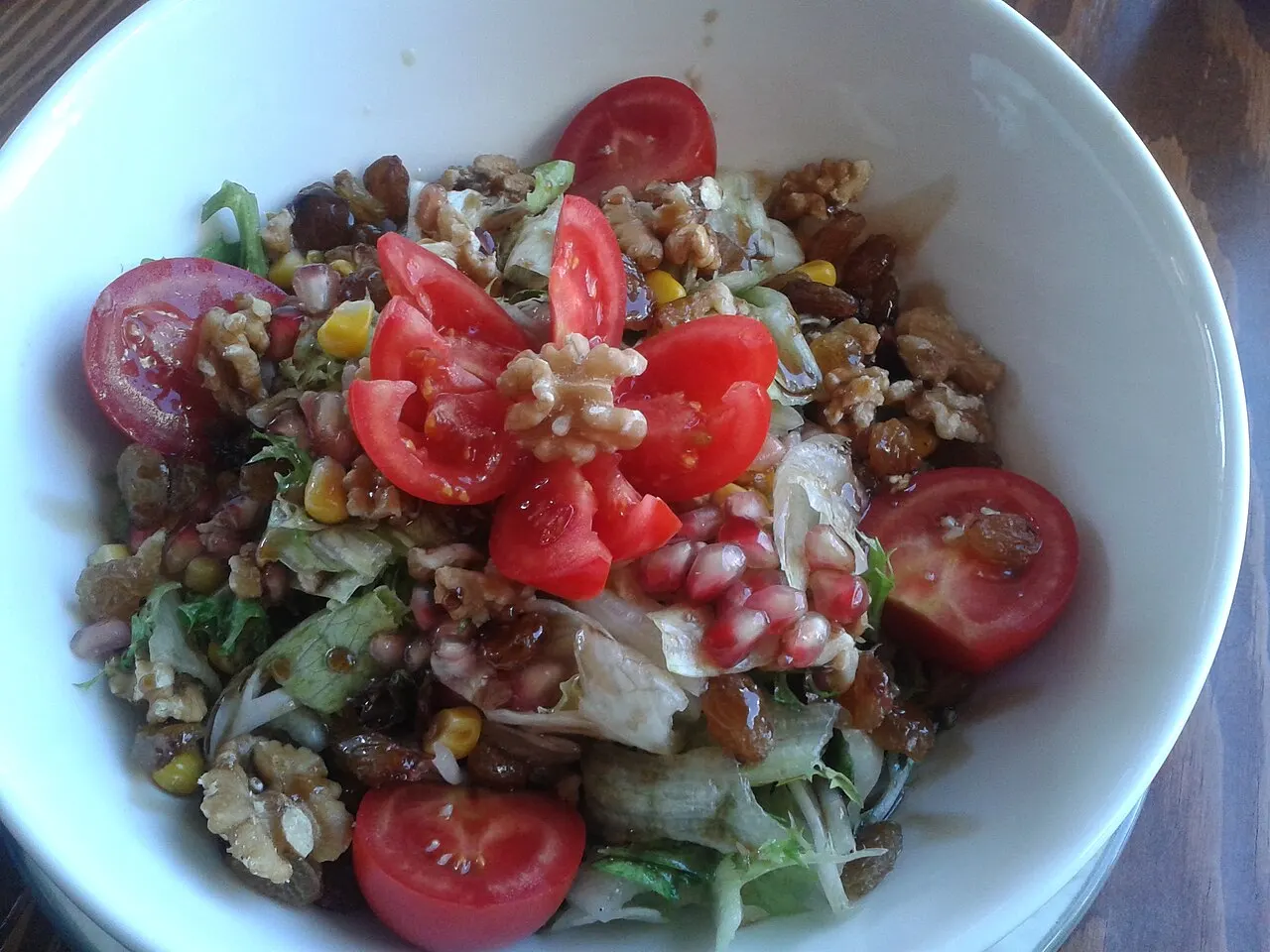
The ones that belong to the pattern: walnuts, pomegranate molasses, tomatoes. Corn, raisins, and lettuce were added later. Pomegranate seeds appear as a garnish on some tables in Antep, but they are not part of the pattern.
This plate has two more problems. The tomatoes are halved, not finely chopped. The pepper, onion, and parsley are also missing. So even if the taste recalls pomegranate molasses, the plate does not have the texture of Gavurdağı. This is the first question to ask when you read a recipe: does the pattern still stand?
When you taste a spoonful...
| If the salad is | Do this now | Next time |
|---|---|---|
| Sweet like syrup | A few drops of lemon and a pinch of salt | Read the label: pomegranate molasses made only from pomegranate |
| Too sour | 1 Tbsp (15 ml) olive oil, a little more tomato | Add pomegranate molasses a little at a time and taste each time |
| Water in the bowl | Drain the water and add 1 tsp (5 ml) pomegranate molasses | Remove the tomato seeds and combine at serving time |
| Soft walnuts | Sprinkle a handful of toasted walnuts on top | Add the walnuts last |
| Bitter walnuts | Pick out the bitter walnuts and replace them with fresh ones | Taste the walnuts first. If they are bitter, they are old or over-toasted |
| Onion too strong | A little more tomato and parsley | Rub the onion with salt and sumac, then squeeze it (step 2) |
| One-note taste | A pinch of chili flakes or sumac | Put the spices in the dressing, not on top of the salad |
Six salads, one pattern
Each page changes one part of the pattern. If you go in order, each salad differs from the one before by only a few things.
Next: Salad-e Shirazi. Lemon comes back, dried mint comes in, and the oil drops to little or none.
Did you make it?
Now you know two salads. Better still, you learned the second one by looking at the first.
Techniques: Knife · Acid and balance · Heat control
If it goes wrong: Bland, something is missing · Too sour