Salad-e Shirazi is an Iranian salad led by cucumber, with lemon and dried mint. The salt goes in first, the salad rests for 15 minutes, and the liquid at the bottom becomes the dressing.
Allergens: none
Salad-e Shirazi
It comes beside the rice, and you finish it with a spoon, down to the juice at the bottom of the bowl.
In shepherd's salad (çoban salata), water at the bottom of the bowl was a mistake. In Shirazi, the same water is the dressing. This page teaches how salt pulling out water turns into the opposite rule when the goal is different.
Salad-e Shirazi takes its name from the city of Shiraz in southern Iran. In Iran the salad is eaten beside rice and kebab. Verjuice (ab-ghooreh, the sour juice of unripe grapes) is often used in place of lemon.
Four changes, four reasons
The pattern is the same: chopped raw vegetables + salt + acid (+ oil) + herb. You know the cut from Gavurdağı salad: 0.5 cm cubes. Here is what changes:
Salt goes in first, the salad rests
Salt pulls water out of vegetables. In shepherd's salad you do not want that water, so the salt goes in last. In Shirazi the vegetable water mixes with the lemon and becomes the dressing. That is why Shirazi is salted first and then rests for 15 minutes.
The ratio flips
Oil softens the sourness of lemon and coats the surface of the vegetables. It also sits as a separate layer on top of the lemony water at the bottom. In Shirazi you want to taste the sourness directly and be able to drink the water. That is why you use no oil or just 1 Tbsp (15 ml).
The herb is dried, and the order changes
The aroma of dried mint sits inside the dried leaf and passes into liquid only once the leaf is wet. This takes a few minutes. A fresh herb, on the other hand, darkens if it stays in lemon for long. That is why a fresh herb goes in last and a dried herb goes in first.
Cucumber takes the lead, pepper goes out
In shepherd's salad there was more tomato than cucumber. In Shirazi the cucumber is about one and a half times the tomato. Cucumber is cool and crisp, and its juice tastes mild. Shirazi is eaten to cool the mouth beside heavy rice or kebab. That is why cucumber leads and the long green pepper stays out.
The water at the bottom of the bowl: mistake or dressing?
It depends on the salad. In all three salads, salt pulls out water. This rule does not change. The only thing that changes is whether you want the water at the bottom of the bowl. See which steps that decision changes:
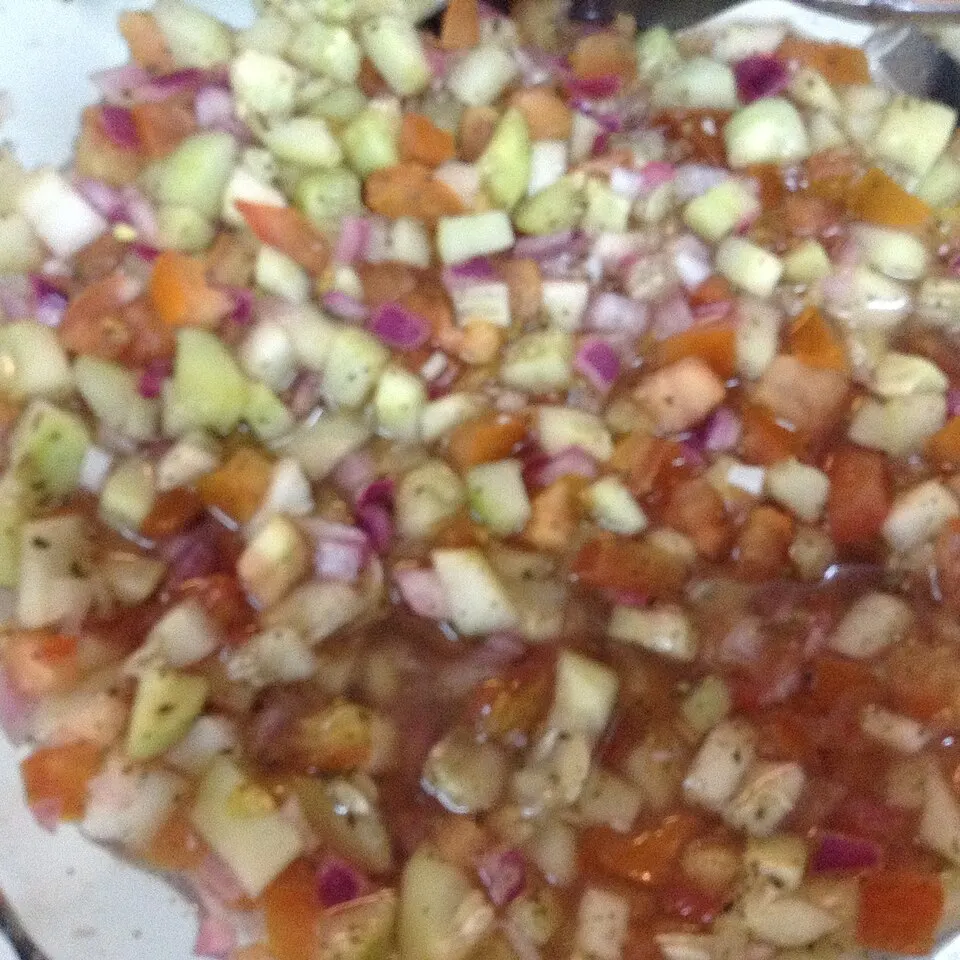
| Shepherd's | Gavurdağı | Shirazi | |
|---|---|---|---|
| Water at the bottom | Not wanted | Not wanted | Wanted |
| Salt | 5 min before serving | In the dressing, at serving time | First |
| Tomato juice | Goes in the bowl | Seeds removed | Goes in the bowl |
| Oil : acid | 3 : 1 | 3 : 2 | 1 : 3 |
| Herb | Fresh, last | Fresh, last | Dried, first |
| Rest | None | None | 15 min |
What and how much
Grams are the main measure, and household amounts are approximate. A tsp is 5 ml and a Tbsp is 15 ml. If you have no measuring spoons, 5 ml is about 1 level dessert spoon. If you change the number of people, the amounts adjust on their own.
1 Tbsp (15 ml) olive oil, 3 Tbsp (45 ml) lemon juice. This ratio is the reverse of the 3:1 ratio in shepherd's salad. The oil is optional. If you leave it out, the salad is still Shirazi.
Chef's Essentials Salad dressing ratios (oil : acid, by spoon) →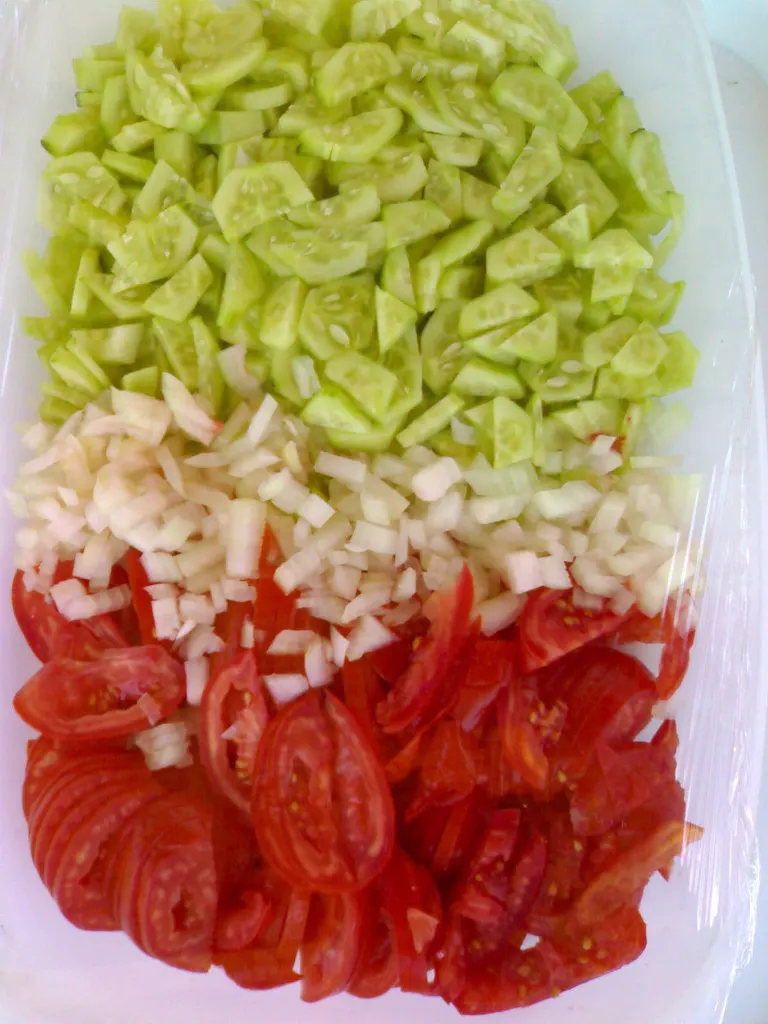
Cucumber first
Choose a small cucumber with thin skin and small seeds. Persian cucumbers are the best match, and they are sold in most large supermarkets. If you cannot find them, use an English cucumber and go by the grams. The skin keeps the cubes from falling apart and gives the salad color. That is why you do not peel it.
Red onion is sweeter than white onion, and its color shows in the salad. If you have no red onion, you can use white onion.
Green, white, red. A flag, until you stir.
Dried mint does not go straight in from the jar
There is nothing new in the knife work, because you use the 0.5 cm cube from Gavurdağı salad. The new move in Shirazi is rubbing dried mint between your palms. Dried mint is mint leaf dried until crisp and crumbled, and it is a common seasoning in Iran and Turkey. Find it at a Middle Eastern grocery or online, or open a tea bag whose only ingredient is spearmint or peppermint.
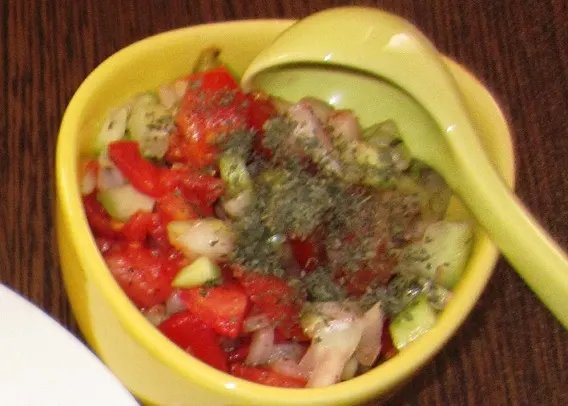
Mint dries in summer and smells of summer again in a winter bowl.
Rub it in your palms
The aroma of dried mint stays inside the unbroken leaf. When you rub it between your palms, the leaf crumbles and the aroma comes out. That is why dried mint goes in rubbed by hand and not straight from the jar.
Into the liquid first
A dried leaf softens when it gets wet and gives its aroma to the liquid. Dried mint sprinkled on top of the salad stays dry and catches in your teeth. That is why dried mint goes in at the very start, with the lemon and salt.
Dried is one third of fresh
A dried herb has lost its water, so the same spoon holds more leaf. That is why you use one third as much dried mint when a recipe calls for fresh. When a recipe calls for dried mint, you use three times as much fresh. For this recipe, that is 2 Tbsp (30 ml) of chopped fresh mint. Add fresh mint just before serving, because it darkens in lemon.
Check by smell
If no smell stays on your palms after rubbing, the mint is old. Using more old mint does not bring the aroma back. It makes the salad dusty. So buy new mint instead of raising the amount.
Seven steps: this time the dressing comes first
You know this is a step you did in shepherd's salad or Gavurdağı. New is what sets this salad apart.
Make the dressing in the bottom of the bowl New
Put the lemon juice, salt, and black pepper in the bowl. Rub the dried mint between your palms, crumble it in, and stir.
Why? The aroma of dried mint passes into liquid in a few minutes. While you cut the vegetables, the mint soaks and the salt dissolves in the lemon. That is why, unlike in shepherd's salad, the dressing comes first.
Chop the red onion fine, drop it in the dressing New
Chop the onion to 0.5 cm or smaller. Put the onion directly into the lemony dressing in the bowl.
Why? The acid in lemon reduces the onion's sharp taste. The onion sits in the dressing while you cut the other vegetables. That is why you do not need to rub it with salt and rinse it as in shepherd's salad.
Cut the cucumber into 0.5 cm cubes You know this
Cut off the ends and taste. If it is bitter, cut off a little more. Do not peel it. As in Gavurdağı salad, go slice → stick → cube, with a half-centimeter spacing.
Why? A cucumber's bitterness collects at the ends, so you taste the end first. 0.5 cm cubes have a large total surface and the dressing clings to it. That is why each spoonful brings dressing with it.
Cube the tomato, add it with its juice You know this
Cut the tomato into 0.5 cm cubes. Do not remove the seeds, and add the juice on the board to the bowl.
Why? In Gavurdağı you kept tomato juice out of the bowl because it thinned the pomegranate molasses. In Shirazi the tomato juice is part of the dressing. That is why it goes in the bowl.
Mix, rest in the fridge for 15 minutes New
Mix the vegetables with the dressing and cover the bowl. Put the bowl in the fridge. Let it sit until water collects at the bottom, at least 15 and at most 30 minutes.
Why? Salt pulls the water out of the cucumber and tomato, the water mixes with the lemon, and a dressing forms at the bottom. If the salad sits longer than 30 minutes, the cucumber loses most of its water and its crunch. That is why the rest is 15–30 minutes.
If you like, drizzle 1 Tbsp (15 ml) olive oil New
Drizzle the olive oil over the salad right before serving. If you prefer, you can leave it out.
Why? If the oil goes in during the rest, it coats the surface of the vegetables and slows the salt's pull on the water. That is why the oil, if you use it, goes in last.
Taste a spoonful, serve with its juice You know this
Taste the vegetables along with the water at the bottom. Adjust using the table below. Put some of the water from the bottom in each serving bowl and give each person a spoon.
Why? The sourness of the lemon and the water the vegetables release differ every time. The dressing of Shirazi is the water at the bottom. That is why you include that water when you taste.
What does resting change?
Resting turns the lemon, salt, and vegetable water into one dressing. Divide the salad between two bowls. Taste Bowl A right away, and taste Bowl B after 15 minutes in the fridge. In each bowl, taste a spoonful of the water at the bottom first, then a cube of cucumber.
At the bottom of Bowl A there is almost no water other than the lemon juice. You taste the lemon, salt, and vegetables separately. At the bottom of Bowl B, lemony, minty vegetable water has collected, and it tastes like a single dressing. The cucumber in Bowl B has softened a little but is still crisp. In both shepherd's salad and Shirazi, salt does the same job: it pulls out water. That is why you need to know the reason and not just memorize a rule. You decide by the salad whether you want the water that salt pulls out.
Which salad does this rule belong to?
Each rule below belongs to one of the three salads you now know. Choose which one. The answer shows right away.
The salad rests for 15 minutes before serving.
So the water that salt pulls out can mix with the lemon and become the dressing.
The seedy part of the tomato stays out of the bowl.
So the water does not thin the pomegranate molasses that keeps the dressing thick.
The oil is three times the acid.
3:1 is the vinaigrette ratio. Gavurdağı uses 3:2, and Shirazi reverses it to 1:3.
The herb is rubbed in the palms and goes into the dressing first.
The aroma of dried mint passes into liquid only once the leaf is wet.
The onion is rubbed with salt, then rinsed in cold water.
In Gavurdağı it is not rinsed, so the sumac stays. In Shirazi the onion sits in lemon.
The dressing is whisked in a separate bowl, then poured over the salad.
Pomegranate molasses is thick, and if poured straight in it collects in one spot.
When you taste a spoonful...
| If the salad is | Do this now | Next time |
|---|---|---|
| No water at the bottom | A pinch of salt, then wait 5 more minutes | Put the salt in the dressing at the very start |
| Too much water, soft cucumber | Drain off some of the water and add a few cubes of fresh cucumber | Do not let it sit longer than 30 minutes |
| Sour enough to pucker your tongue | 1 Tbsp (15 ml) olive oil or a little more tomato | Measure the lemon juice: 3 Tbsp (45 ml) for 4 people |
| No mint smell | Rub a pinch of dried mint in your palms, add it, and wait 3 minutes | Put the mint in the dressing at the very start. If it has no smell, buy new mint |
| Mint catches in your teeth | Stir and wait 5 more minutes | Put the mint in the dressing, not on top |
| Onion too strong | A little more cucumber | Chop the onion finer and let it sit in the lemon (step 2) |
| Flat | First a pinch of salt, then a few drops of lemon | Weigh the salt: 0.7% of the vegetables |
Six salads, one pattern
Each page changes one part of the pattern. If you go in order, each salad differs from the one before by only a few things.
Next: Pico de gallo. Lime replaces lemon, fresh cilantro replaces dried mint, and hot pepper comes in.
Did you make it?
The same salt, three different decisions. Now you look past what a recipe says to why it says it.
Techniques: Knife · Salt · Acid and balance · Aromatic base
If it goes wrong: Bland, something is missing · Too sour